
In modern homes, offices, restaurants, studios, and commercial spaces, ceiling design is no longer only about appearance. A ceiling also plays a major role in sound control, comfort, privacy, and the overall usability of a space. In a busy city like Houston, where properties range from corporate offices and healthcare facilities to restaurants, retail spaces, and custom homes, acoustic performance has become an important part of interior construction.
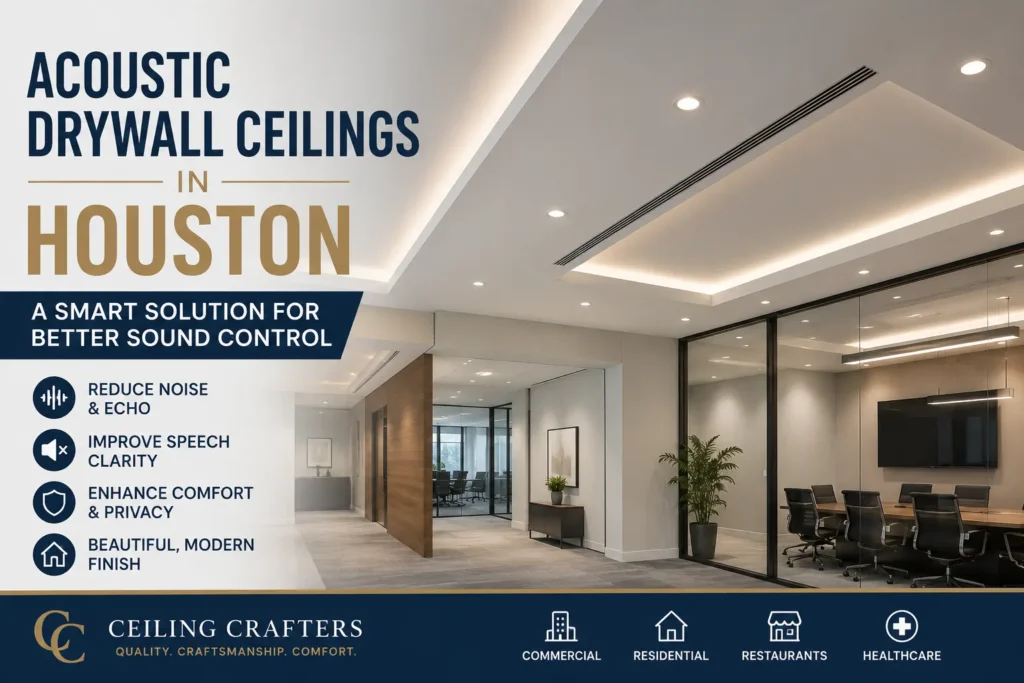
That is why many property owners, builders, and designers are choosing acoustic drywall ceilings Houston solutions for spaces that need a clean finish, better noise management, and long-term durability. Unlike standard ceiling systems, acoustic drywall ceilings are designed to reduce unwanted noise, improve speech clarity, and create a more comfortable indoor environment.
For professional ceiling installation, finishing, and acoustic ceiling solutions, Ceiling Crafters helps property owners achieve functional, attractive, and high-performance ceiling designs suited to residential and commercial needs.
What Are Acoustic Drywall Ceilings?
Acoustic drywall ceilings are ceiling systems built with sound-control performance in mind. They use drywall materials, insulation, framing techniques, and finishing methods that help absorb or reduce sound transmission. These ceilings are commonly used in spaces where noise control matters, such as conference rooms, offices, schools, clinics, home theatres, apartments, restaurants, and multi-use commercial buildings.
The main purpose of an acoustic drywall ceiling is to manage how sound behaves inside a room. A poorly designed ceiling can allow noise to echo, travel between rooms, or make conversations unclear. An acoustic drywall ceiling helps reduce those issues by improving the way sound is absorbed and contained.
Unlike exposed acoustic tiles, drywall ceilings offer a smooth, seamless appearance. This makes them ideal for property owners who want acoustic benefits without compromising visual appeal.
Why Sound Control Matters in Houston Properties
Houston is home to many fast-growing business districts, residential communities, entertainment venues, medical offices, and mixed-use developments. In these environments, noise control can directly affect productivity, privacy, customer experience, and comfort.
In offices, poor acoustics can make it difficult for employees to focus. In restaurants, too much echo can make conversations uncomfortable. In healthcare spaces, sound privacy is essential. In homes, noise between rooms or floors can affect daily living. Acoustic drywall ceilings help solve these problems by improving the acoustic quality of the space.
For homeowners, acoustic ceilings are especially useful in media rooms, bedrooms, living areas, nurseries, and shared-wall properties. For businesses, they help create more professional and comfortable environments for staff, clients, and visitors.
Benefits of Acoustic Drywall Ceilings
One of the biggest benefits of acoustic drywall ceilings is improved sound absorption. When sound waves hit hard surfaces, they bounce back and create echo. Acoustic ceiling systems help reduce this reflection, making the room sound clearer and more controlled.
Another important benefit is sound isolation. In commercial buildings, apartment complexes, and multi-room properties, controlling sound transfer between spaces is critical. Acoustic drywall ceiling systems can be designed to reduce noise movement from one area to another.
These ceilings also provide a clean and modern appearance. Since drywall can be finished smoothly, painted, textured, or designed with architectural details, it works well in both traditional and contemporary interiors.
Durability is another advantage. Drywall ceiling systems are strong, long-lasting, and suitable for many property types. When installed correctly, they can withstand daily use while maintaining their appearance and performance.
Where Acoustic Drywall Ceilings Are Commonly Used
Acoustic drywall ceilings are suitable for a wide range of spaces. In office buildings, they are often used in meeting rooms, private offices, coworking areas, and executive suites. These spaces need better speech clarity and reduced background noise.
In restaurants and hospitality spaces, acoustic ceilings can make dining areas more comfortable by lowering echo and excessive sound reflection. A better acoustic environment helps guests enjoy conversations without feeling overwhelmed by noise.
In residential properties, acoustic drywall ceilings are useful in home theatres, music rooms, bedrooms, basements, and open-plan living areas. They are also a practical choice for multi-family housing where sound transfer can be a concern.
In educational and healthcare settings, acoustic control is especially important. Classrooms require clear communication, while medical offices need privacy and calm environments. Acoustic drywall ceiling systems can support both needs.
How Acoustic Drywall Ceilings Improve Interior Design
Many people assume acoustic ceilings are only functional, but modern drywall ceiling systems can also enhance interior design. Because drywall creates a smooth surface, it allows for custom ceiling shapes, recessed lighting, soffits, tray ceilings, layered ceiling designs, and decorative finishes.
This makes acoustic drywall ceilings a strong option for property owners who want sound control without sacrificing style. They can be designed to blend naturally with the rest of the room or become a featured architectural element.
For example, in a modern office, acoustic drywall ceilings can create a professional finish while supporting better productivity. In a luxury home, they can be integrated with lighting and design features to improve both comfort and aesthetics. In a restaurant, they can help create a welcoming atmosphere that feels polished and enjoyable.
Important Factors Before Installation
Before installing acoustic drywall ceilings, it is important to evaluate the purpose of the space. A conference room, for example, has different acoustic needs than a home theatre or restaurant dining area. The ceiling design should match the way the room will be used.
The type of drywall, insulation, framing, ceiling height, lighting layout, HVAC placement, and room shape can all affect acoustic performance. This is why professional planning matters. A ceiling should not only look good, but also perform properly.
Moisture conditions should also be considered, especially in certain Houston properties where humidity may affect building materials over time. Proper material selection and installation methods help protect ceiling performance and durability.
Working with experienced ceiling professionals ensures that the installation is planned correctly from the start. Ceiling Crafters understands how ceiling systems need to balance design, structure, and acoustic function.
Acoustic Drywall Ceilings vs Standard Ceilings
Standard drywall ceilings may provide a clean look, but they are not always designed for sound control. Without acoustic planning, noise can travel easily, echo can become noticeable, and privacy can be reduced.
Acoustic drywall ceilings use more intentional design methods. These may include sound-rated materials, insulation, resilient channels, special framing techniques, or other sound-control strategies depending on the project requirements.
The difference is especially noticeable in rooms where people speak, work, relax, or gather. A well-designed acoustic ceiling can make a room feel quieter, more comfortable, and more refined.
For businesses, this can improve the customer or employee experience. For homeowners, it can create a more peaceful living environment.
Why Professional Installation Matters
Acoustic ceiling performance depends heavily on proper installation. Even high-quality materials may not perform well if the ceiling is not installed correctly. Gaps, poor sealing, weak framing, improper finishing, or incorrect material placement can reduce sound-control benefits.
Professional installers understand how to create a ceiling system that supports both appearance and function. They can also help prevent common problems such as uneven surfaces, cracking, poor finishing, or weak acoustic results.
When choosing a contractor for acoustic drywall ceilings Houston, property owners should look for experience, attention to detail, quality workmanship, and knowledge of acoustic ceiling requirements. A reliable ceiling specialist can help guide the project from planning to completion.
How Ceiling Crafters Supports Better Ceiling Solutions
Ceiling Crafters provides ceiling solutions designed to improve both visual appeal and practical performance. Whether the project involves a commercial office, home renovation, restaurant, clinic, or custom interior, the right ceiling system can transform the space.
The team focuses on careful preparation, clean installation, smooth finishing, and project-specific ceiling design. For acoustic drywall ceilings, this means understanding how sound moves through a space and selecting installation methods that support better results.
From simple acoustic improvements to more detailed ceiling designs, Ceiling Crafters helps clients create ceilings that feel polished, durable, and functional.
Choosing the Right Ceiling for Long-Term Value
A ceiling is one of the most important surfaces in any room. It affects lighting, sound, comfort, design, and property value. Investing in acoustic drywall ceilings can be a smart decision for property owners who want a space that looks refined and performs better every day.
For commercial properties, better acoustics can support productivity, professionalism, and customer comfort. For residential properties, they can improve privacy, relaxation, and daily quality of life.
When installed by experienced professionals, acoustic drywall ceilings offer long-term value by combining sound control, durability, and modern design flexibility.
Final Thoughts
Acoustic drywall ceilings are a practical and attractive solution for Houston property owners who want better sound control without compromising design. They are suitable for homes, offices, restaurants, healthcare spaces, educational facilities, and many other interiors where comfort and noise reduction matter.
By choosing a skilled ceiling contractor, property owners can achieve a ceiling system that supports both performance and appearance. For reliable ceiling solutions, Ceiling Crafters offers the craftsmanship and attention to detail needed to create high-quality results.
If you are planning a new build, renovation, or commercial improvement, acoustic drywall ceilings Houston services can help you create a quieter, more comfortable, and more professional space.
FAQs
1. What are acoustic drywall ceilings used for?
Acoustic drywall ceilings are used to reduce echo, control noise, improve speech clarity, and limit sound transfer between rooms. They are commonly installed in offices, restaurants, homes, studios, schools, and healthcare spaces.
2. Are acoustic drywall ceilings good for homes?
Yes. Acoustic drywall ceilings are a great option for homes, especially in bedrooms, media rooms, home offices, basements, and living areas where better sound control and comfort are important.
3. Do acoustic drywall ceilings look different from regular ceilings?
Not necessarily. One of the main advantages of acoustic drywall ceilings is that they can look smooth, clean, and modern like a standard drywall ceiling while offering improved sound-control benefits.
4. How long do acoustic drywall ceilings last?
When installed correctly, acoustic drywall ceilings can last for many years. Their lifespan depends on material quality, installation methods, building conditions, and proper maintenance.
5. Why should I hire professionals for acoustic drywall ceiling installation?
Professional installation ensures the ceiling is properly framed, finished, sealed, and designed for sound performance. Poor installation can reduce acoustic benefits and affect the final appearance of the ceiling.